
A film starts as an idea, but reaching an audience takes more than a camera and a good story. You need a workable sequence of creative and practical decisions, from shaping a filmable premise to preparing a finished cut for release. Whether you are making a Nollywood short with a small crew or filming a documentary on your phone, each stage affects what you can capture and deliver.
Shaping the Idea into a Filmable Story
Give the Idea a Clear Shape
Start with one sentence that names your main character, their goal and the obstacle in their way. Then decide what changes by the end. A story about a Lagos caterer racing to save her first major event, for instance, has a character, a deadline and a contained setting. Build scenes around choices that move her towards or away from her goal, and remove moments that do not change the situation.
Planning the Shoot on a Small Budget
Prepare Your Script, Schedule and Resources
Start with a script breakdown: mark each scene’s location, cast, props, costume needs and time of day. Group scenes by location rather than story order, so a short film set in one family home does not require repeated trips across town. Build a practical schedule around cast availability, daylight and travel, then assign clear crew roles. A simple spreadsheet can track each scene, contact number and required item, while a borrowed reflector or a friend’s living room can keep costs manageable.
Directing the People and the Story
Give Performances a Clear Purpose
Before each take, tell your actors what their characters want and what stands in the way. A playable direction such as “keep him from leaving” gives an actor a clear action, while “look more upset” describes only an emotion. Keep notes brief, then allow performers to make the lines feel natural. For a tense family scene, focus on the character trying to avoid an apology, not on displaying anger.
Keep Each Scene Focused
As director, track the scene’s main change: what a character learns, decides or loses by the end. If a conversation circles without changing the story, cut repeated lines or enter the scene later. On a small production, use a simple scene list with each scene’s purpose and the character who drives it. That keeps cast and crew aligned on the action, whether you are filming a market dispute or a quiet kitchen confession.
Shooting Clear Images and Recording Good Sound
Capture Usable Footage and Audio
Keep each shot steady with a tripod, a stable surface or both hands braced against your body. Set your phone or camera to record at its highest practical resolution, then lock focus and exposure on your subject to avoid distracting shifts. Place an external microphone close to the speaker, or move your phone nearer and turn off fans or generators where possible. Record a short test and listen through headphones for wind, handling noise and clipping before filming the scene.
Editing the Film from First Cut to Final Version
Shape the Cut
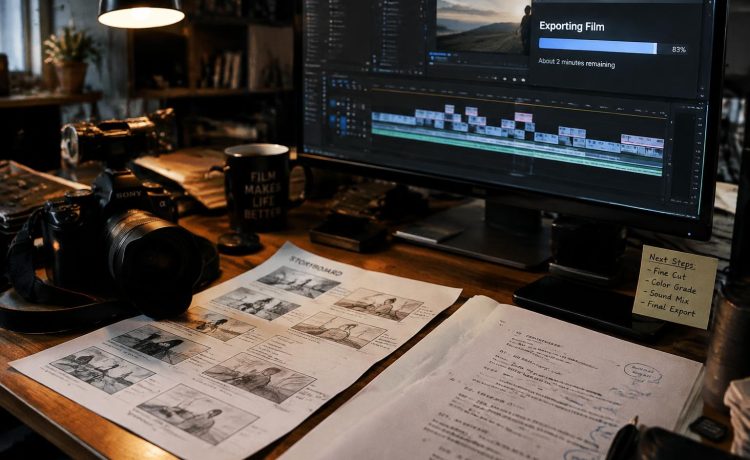
Begin by organising your footage into clearly named folders, then build a rough cut that follows the story rather than preserving every shot. In your editing software, place the strongest takes on the timeline and trim pauses that do not add meaning. Watch the sequence without stopping: a scene that reads clearly on the page may feel slow once the images and dialogue sit together.
Refine Picture and Sound
Once the structure works, tighten each scene and use cutaways to cover edits or clarify action. Match colour and exposure between shots, then balance dialogue, room tone, music and effects so speech stays intelligible on ordinary speakers. Export a test file and watch it from beginning to end, noting dropped frames, abrupt audio changes and spelling errors in any titles before producing the final version.
Releasing and Promoting the Film
Choose a Platform That Fits Your Film
Match your release platform to the film’s length, audience and access needs. YouTube suits short films and offers a straightforward way to share a public link, while a local screening at a community hall or film club gives you direct contact with viewers. Add accurate captions, a clear synopsis and a thumbnail that reflects the finished film, then test playback on a phone before sharing the link.
Reach Viewers with Practical Promotion
Build interest with a short trailer, still images and brief posts that explain the film’s subject or production story. Share them through your own social channels and relevant filmmaking or community groups, following each group’s posting rules. Ask cast and crew to pass along the release link, and give them a ready-to-use caption and image. After release, note which posts bring viewers to the film and use that response to plan your next update.
Summing up
From the first story outline to the release link, you shape a film through connected decisions: write for the locations and cast you can access, plan each shoot day, direct with clear intentions, and capture clean dialogue alongside usable images. In the edit, organise your footage, build a rough cut, then refine pacing, sound and colour before exporting a version suited to your chosen platform. A short Nollywood drama or documentary is ready to share when its final cut, credits and promotional material are prepared.
