
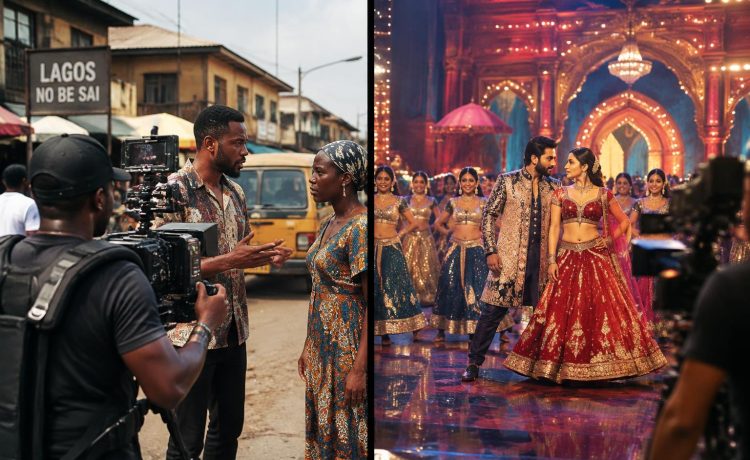
Nollywood and Bollywood are two major film industries, but their names refer to distinct production cultures rather than interchangeable styles of cinema. As you compare them, you encounter Nigeria’s wide-ranging film sector and India’s Hindi-language film industry, each shaped by its own languages, audiences, and filmmaking traditions. Bollywood is centered in Mumbai, while Nollywood is rooted in Nigeria.
Origins and Industry Context
To understand how these industries took shape, you need to look at the conditions that supported filmmaking in Nigeria and India, including access to capital, local audiences, and established theatrical traditions. Each industry developed within a different national history: Nigerian filmmaking grew amid economic and distribution constraints, while Hindi-language cinema took root in a large, organized studio system. Those beginnings influenced the scale and institutional structure of each industry.
The growth of Nigeria’s film industry
In Nigeria, you can trace Nollywood’s rapid emergence to the early 1990s, when economic pressures and limited cinema access encouraged filmmakers to make features directly for home video. The success of Living in Bondage, released in 1992, showed that locally made stories could attract a substantial Nigerian audience. Producers built on that demand through commercial video distribution, creating an industry shaped by independent entrepreneurs rather than a long-established studio network.
The history and scale of India’s Hindi-language film industry
Hindi-language cinema developed around Bombay, now Mumbai, where you can trace its roots to early Indian filmmaking and the growth of commercial studios in the 1930s. The arrival of sound in Alam Ara in 1931 expanded the appeal of films made in Hindi and Hindustani. Over time, Mumbai became the industry’s main production center, and Bollywood grew into one part of India’s much larger, multilingual film sector.
Film Production and Distribution
Production and distribution depend on different combinations of financing, crew capacity, release planning, and access to screens. As you follow a film from development through release, you encounter varied workflows: a project might be shot quickly for local video markets, or built around extensive sets and a coordinated theatrical campaign. These choices shape how resources reach cast and crew, which technical services are available, and whether audiences first encounter a title in cinemas, on television, or through a streaming platform.
Production scale, budgets, and filmmaking methods
In Nigeria, you often see producers working with lean budgets, compact crews, digital cameras, and fast schedules, particularly for films made for local platforms. Bollywood productions, especially large Hindi-language releases, more commonly coordinate substantial financing, specialist departments, elaborate sets, and extended post-production, though budgets vary widely in both industries. A Nollywood shoot may rely on practical locations and a smaller lighting package, while a large Mumbai production can involve choreographed set construction and dedicated visual-effects teams.
Distribution networks and access to audiences
Across Nigeria, you encounter Nollywood releases through cinemas, television, video-on-demand services, and platforms such as YouTube, with distribution shaped by regional reach and digital access. Bollywood titles often use broad theatrical networks in India, followed by television and streaming agreements that extend their availability abroad. For a viewer, the route can differ by title: a Nigerian film might debut online, while a major Hindi release opens in cinemas before reaching a streaming service.
Language, Storytelling, and Genre
Language and narrative conventions shape how you experience films from both industries, from the dialogue and performance styles to the conflicts that drive a plot. Nigerian and Indian filmmakers draw on distinct linguistic traditions and cultural references, while working across genres that include comedy, romance, drama, and action. As you compare individual films, pay attention to how speech, family relationships, music, and dramatic structure establish each story’s setting and emotional stakes.
Languages and cultural storytelling
In Nollywood films, you often hear English, Nigerian Pidgin, and languages such as Yoruba, Igbo, and Hausa, sometimes combined within one story. That code-switching can signal a character’s community, status, or intimacy with family. Bollywood films are commonly made in Hindi, with Urdu expressions and other regional languages appearing in dialogue or songs. You can hear cultural storytelling in forms such as Yoruba family drama and the Hindi-language film’s use of song to express a character’s inner life.
Common genres, themes, and cinematic conventions
Across Nollywood, you encounter family conflict, faith, ambition, and social change in dramas and comedies, often carried by direct dialogue and tightly focused scenes. Bollywood frequently blends romance, family drama, action, and musical sequences within a single narrative, using songs to mark emotional shifts or relationships. Both industries revisit kinship and personal duty, but their conventions differ: a Nollywood plot might center on a household dispute, while a Bollywood story may build toward a dance sequence that brings relatives together.
Audiences and Global Influence
For viewers, Nollywood and Bollywood offer distinct routes into stories shaped by Nigerian and Indian experiences. Bollywood’s Hindi-language films reach a vast audience across India, while Nollywood’s output speaks to Nigeria’s many language communities and shared national culture. Both industries also connect with audiences beyond their home countries, but their international recognition follows different paths, shaped by language, diaspora ties, and the kinds of films viewers encounter abroad.
Domestic audiences and diaspora communities
Across India, Bollywood attracts viewers through Hindi films that circulate widely across regions, even as audiences also follow cinema in other Indian languages. Nollywood reaches Nigerians through English-language productions and films in languages such as Yoruba, Igbo, and Hausa. For you as a viewer abroad, diaspora networks provide another point of access: Nigerian communities share Nollywood films across borders, while Indian communities sustain interest in Bollywood through family viewing, cultural events, and streaming platforms.
International visibility and cultural influence
Globally, Bollywood has a longstanding public profile, with its stars, songs, dance sequences, and film imagery familiar to audiences well beyond India. Nollywood’s international visibility has grown through streaming services and the circulation of Nigerian films among African and diaspora audiences. If you encounter either industry outside its home market, Bollywood is often represented by large-scale Hindi releases, while Nollywood is increasingly associated with contemporary Nigerian stories and performers such as Genevieve Nnaji.
Economic Models and Industry Challenges
For you to understand the business pressures behind each industry, it helps to look at who funds production, how films reach paying viewers, and which costs are hardest to recover. Nigeria’s market relies heavily on direct sales and expanding digital distribution, while India’s film business draws on larger theatrical circuits and a wider range of commercial partners. In both countries, uneven infrastructure and changing audience habits shape how producers manage risk and secure returns.
Financing, box office, and commercial models
In Nigeria, you will find producers combining private investment, distributor advances, cinema receipts, and licensing to streaming platforms, with limited access to formal film financing. India’s producers typically draw on studio investment, co-production, presales, brand partnerships, and theatrical revenue across a vast domestic market. For you, the key distinction is how returns are collected: Nigerian films often depend on digital licensing and local sales, while Indian releases can earn through cinema runs and satellite or streaming rights.
Regulation, piracy, and industry infrastructure
Across Nigeria, you encounter gaps in reliable power, production facilities, cinema access, and formal distribution, which raise costs and restrict earnings beyond major cities. India has a larger network of studios and screens, but producers still face uneven access across regions and regulatory requirements that vary by state and language market. Piracy affects both industries, cutting into legitimate sales and licensing income; Nigerian producers also contend with informal distribution channels that complicate rights enforcement.
To wrap up
You can distinguish Nollywood and Bollywood by their origins, production systems, languages, and storytelling traditions. Nigeria’s film industry is known for productions in English and Nigerian languages, often shaped by local settings and direct-to-video distribution, while India’s Hindi-language Bollywood is part of a larger, multilingual cinema industry with established theatrical conventions. Both reach audiences beyond their home countries, but they reflect different cultural histories and creative practices, from Lagos-set family dramas to Hindi-language song-and-dance films.
