
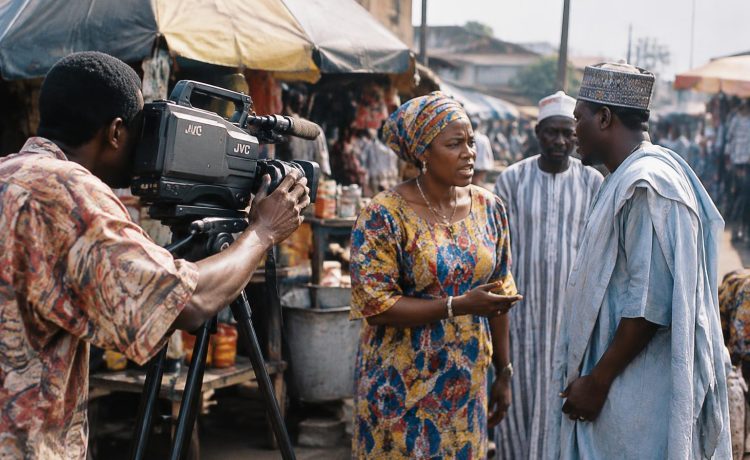
Nigerian cinema grew from a mix of theatrical traditions, television production, and home-video filmmaking, eventually earning the name Nollywood. To understand how it began, you need to look beyond today’s streaming releases to the practical choices filmmakers made, including shooting on video and distributing films directly to viewers. Those choices shaped a major feature of Nollywood’s early identity: fast-moving, locally rooted storytelling.
Nigeria Before Nollywood: Early Film and Television
Before Nigerian filmmakers built a durable screen industry, film exhibition and broadcasting established habits of collective viewing. Colonial authorities used cinema for education and public messaging, while commercial exhibitors brought films to audiences in towns and cities. After independence, Nigerian television stations expanded local production, introducing viewers to homegrown drama, performers, and stories in familiar languages. Together, these institutions gave you an early foundation for Nigerian screen culture.
Colonial film exhibition and its audiences
Under British colonial rule, officials used mobile cinema units to screen instructional films in communities with limited access to commercial theatres. These traveling shows often addressed public health, agriculture, or government campaigns, while urban cinemas also screened imported feature films. For audiences, a projector, a temporary screen, and a gathering place turned film viewing into a shared event. The experience reached beyond city theatres, carrying moving images to audiences across Nigeria.
The growth of Nigerian television and local drama
Television extended screen culture into homes and made locally produced drama a regular feature of Nigerian life. The Western Nigerian Television Service, launched in Ibadan in 1959, was among Africa’s earliest television services. Stations in other regions followed, producing programs with Nigerian actors, writers, and presenters. Through studio plays and serialized drama, you encountered local settings, speech, and social concerns on screen, with broadcasts shaped by each station’s production resources.
From Celluloid to Home Video
As production costs rose and cinema infrastructure weakened, you saw filmmakers face a difficult choice: fund expensive celluloid shoots or find a less costly way to reach audiences. Video offered a practical alternative, requiring smaller crews and equipment that was easier to use outside established studios. That shift changed the economics of Nigerian filmmaking, bringing production within reach of independent producers and making direct distribution to viewers more feasible.
Challenges facing Nigeria’s celluloid film industry
Celluloid production demanded costly film stock, laboratory processing and specialized equipment, expenses that placed filmmaking beyond the means of many independent Nigerian producers. With limited access to reliable financing, you could see a project stalled by the cost of shooting and processing, even before distribution began. Theatres also faced operational difficulties, narrowing the routes through which a celluloid film could earn back its investment and making large-scale production increasingly hard to sustain.
The rise of affordable video cameras and distribution
Video cameras and cassette formats lowered the entry costs of production, letting you record without purchasing celluloid or sending reels to a film laboratory. Smaller crews could shoot in homes, offices and local streets, while editing on video equipment reduced the need for specialized post-production facilities. Producers could then duplicate tapes and sell them through existing retail networks, including markets and video shops, placing Nigerian films directly in viewers’ hands.
Living in Bondage and Nollywood’s Breakthrough
Living in Bondage showed that a Nigerian story made for home video could attract a substantial paying audience. Its success gave producers and distributors a clear commercial signal: viewers would buy locally made films in familiar languages, with stories grounded in Nigerian life. For you as a viewer, the film’s significance lies not only in its plot but in the way its release connected filmmaking to cassette sales and everyday access to entertainment at home.
The 1992 film’s production and release
Released in 1992, Living in Bondage was produced by NEK Video Links and directed by Chris Obi Rapu. The Igbo-language film starred Kenneth Nnebue, who had entered video distribution, and featured actors including Nkem Owoh and Francis Agu. Its story of a man drawn into a secret society to gain wealth gave you a recognizably Nigerian setting and a dramatic premise suited to the direct-to-video format, rather than theatrical exhibition.
Audience demand and the home-video model
For audiences, VHS made Living in Bondage available through video shops and informal retail networks, bringing a locally produced feature into homes without relying on cinema screenings. You could rent or buy a cassette, watch it on a home VCR, and share the story with family or neighbors. Strong demand showed distributors that Nigerian-language films had commercial value, while cassette sales linked producers’ returns directly to the number of copies moving through the market.
The Growth of the Home-Video Industry
Entrepreneurial producers built a fast-moving business around compact crews, direct-to-video releases, and stories designed to hold viewers’ attention at home. You encountered films through neighborhood shops, street vendors, and informal networks that moved copies well beyond established cinemas. Marketers shaped release schedules and audience demand, while familiar settings and recognizable stars made each new title easy to sell. This system turned home video into a popular, accessible form of Nigerian entertainment.
Producers, marketers, and distribution networks
Independent producers often worked with marketers who financed projects, promoted titles, and arranged distribution through video outlets and open-air stalls. You could find new releases stacked beside music tapes in markets such as Lagos’s Idumota, where buyers and sellers negotiated directly. Copies then traveled through wholesalers, retailers, and informal traders to towns with few cinema screens. This commercial chain rewarded quick production and strong word of mouth, making a marketable title valuable far beyond its first release.
Popular stories, languages, and genres
Audiences gravitated toward melodramas, comedies, romances, crime stories, and films about family conflict, wealth, faith, and social ambition. You heard productions in English, Yoruba, Igbo, and other Nigerian languages, often with dialogue and settings rooted in everyday life. Titles such as Living in Bondage drew on supernatural fears and the pursuit of money, while Yoruba-language films sustained a long tradition of local performance. That range let viewers choose stories shaped by their communities and concerns.
Digital Change and Global Reach
As digital tools entered production and distribution, you encountered a film industry less constrained by celluloid costs, physical duplication and local screening networks. Affordable cameras and editing software changed how crews captured and assembled stories, while online platforms gave Nigerian films routes to viewers beyond the country. These shifts altered both the practical scale of production and the geography of release, connecting filmmakers in Lagos and other Nigerian cities with audiences across Africa and the diaspora.
Digital filmmaking and evolving production standards
Digital cameras replaced much of the costly film stock used in earlier productions, letting crews review footage on set and reshoot scenes without processing reels. Nonlinear editing software also made it easier for editors to revise sequences, mix sound and prepare versions for different screens. As viewers grew accustomed to sharper images and cleaner audio, you saw producers invest more attention in lighting, color grading and sound recording, even when working with modest crews and locations.
Streaming platforms and international audiences
Streaming services widened access to Nigerian films by placing them in searchable catalogs rather than relying solely on cinemas, television schedules or imported discs. Netflix’s acquisition and commissioning of Nollywood titles brought some productions to subscribers worldwide, while platforms such as iROKOtv built libraries for audiences seeking Nigerian stories online. With subtitles and on-demand viewing, a film made for local release could reach viewers in London, Toronto or Accra without a separate physical distribution network.
Nollywood’s Cultural and Economic Influence
Across Nigeria, films give audiences familiar settings and conflicts while carrying local stories to viewers abroad. Production also connects creative work with practical livelihoods, from acting and camera operation to costume design, editing, distribution, and cinema exhibition. As Nollywood titles circulate on television and streaming platforms, audiences encounter Nigerian languages, customs, and social debates through characters whose lives reflect both urban and rural experiences.
Representation, identity, and social themes
Through stories set in Lagos, Enugu, and smaller communities, you see Nigerian identities portrayed in varied languages, professions, and family structures. Films address themes such as migration, faith, corruption, class, and the pressure to meet family expectations, placing public debates inside recognizable personal conflicts. When a character balances a traditional obligation with a modern career, the story reflects tensions many viewers know without treating Nigerian culture as a single, uniform experience.
Jobs, investment, and international recognition
Behind each production, you find paid work for actors, writers, directors, crew members, caterers, transport providers, and marketers. Independent producers often assemble project-based teams, while distributors, broadcasters, and streaming services create routes to wider audiences and new investment. International recognition also shapes perceptions of Nigeria: titles such as The Wedding Party present contemporary Nigerian fashion, humor, and celebrations to viewers beyond the country, while local premieres sustain demand for Nigerian productions.
Conclusion
You can trace Nollywood’s beginnings from Nigeria’s earlier film and television traditions to the home-video boom that brought locally made stories into households. The release of Living in Bondage marked a defining breakthrough, showing how direct-to-video production could reach audiences beyond conventional cinema distribution. As digital filmmaking and streaming expanded that reach, Nigerian cinema carried its languages, performances, and social realities to viewers around the world. Its history remains visible in the films and video productions that continue to shape Nigerian storytelling.
