
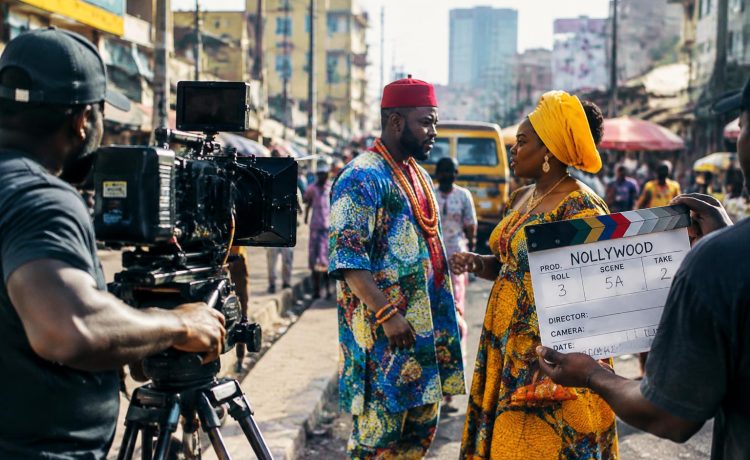
From home-video dramas made for Nigerian audiences to films screened around the world, the country’s movie industry has built a distinct identity. You may know it as Nollywood, a name that echoes Hollywood while pointing to Nigeria’s own production culture. Its origins lie in a popular label that became shorthand for films made across Nigeria.
The Origin of the Name “Nollywood”
The name joins “Nigeria” with “Hollywood,” using the familiar film-industry label as a point of reference while identifying a distinct national setting. Its form is concise and readily recognizable, but the comparison is linguistic rather than a claim that Nigerian filmmaking follows Hollywood’s structure. To understand the label’s origin, you need to distinguish the person credited with introducing it from the early media contexts in which the word appeared.
Who coined the term
Journalist Norimitsu Onishi is widely credited with coining “Nollywood” in a 2002 article for The New York Times about Nigeria’s video-film business. Writing from Nigeria, he formed the word by blending “Nigeria” and “Hollywood,” echoing the naming pattern used by “Bollywood” for India’s Hindi-language film industry. You encounter a compact label shaped for an international readership, rather than a name established through a formal decision by Nigerian filmmakers or an industry body.
Early uses in the media
After Onishi’s article, “Nollywood” appeared in international media as a convenient shorthand for films made in Nigeria, often alongside explanations of the word’s Hollywood resemblance. The label circulated in headlines and reporting, where its familiar construction quickly signaled a national cinema to readers unfamiliar with local film terminology. Early usage was not entirely uniform: some accounts applied it broadly to Nigerian production, while others used it chiefly for the video films that had drawn the press’s attention.
How “Nollywood” Became the Industry’s Name
As Nigerian films moved from local production and distribution into wider public view, “Nollywood” became a shared label across conversations about the industry. You encountered it in news coverage, film criticism, festival programs, and everyday discussion, where a concise name made Nigerian cinema easier to identify. Its use spread through repeated reference rather than a single official naming decision, linking audiences at home with viewers discovering Nigerian films abroad.
The rise of Nigerian home-video films
Home-video production brought Nigerian films into households through VHS tapes and, later, VCDs and DVDs. Producers and marketers in Lagos and other commercial centers circulated titles through shops, street vendors, and informal distribution networks, giving viewers access beyond cinema screens. As audiences encountered a growing range of locally made stories, the films became more visible as a recognizable body of work. “Nollywood” offered journalists and viewers a compact label for that expanding video-film movement.
International attention and popular usage
International media coverage and film festivals carried “Nollywood” beyond Nigeria, using the name to identify Nigerian filmmaking for audiences unfamiliar with its local production networks. You now see it in reviews, cultural commentary, and discussions of African cinema, where the term quickly signals a Nigerian connection. Its circulation across borders reinforced popular usage, while Nigerian filmmakers, viewers, and commentators also adopted it in public conversations about films made at home.
What the Name Represents-and What It Leaves Out
As a label, “Nollywood” gives you a concise way to refer to a broad body of Nigerian filmmaking, but it can suggest a single, unified industry. The term is useful in conversation and international coverage, yet it does not capture every distinction in how films are made, told, or understood. Treating it as shorthand rather than a complete description keeps the name from flattening the varied practices and identities represented in Nigerian cinema.
Nigeria’s film industry beyond the Hollywood comparison
Although the name echoes Hollywood, you should not read Nigerian filmmaking as a smaller version of the American studio system. Nollywood describes an industry with its own commercial habits, storytelling priorities, and relationships between producers, performers, distributors, and audiences. The comparison offers a quick point of recognition, but it says little about how Nigerian films are financed or circulated. A home video drama, for instance, belongs to a different production context than a studio-backed Hollywood feature.
Language, culture, and regional diversity
Across Nigerian films, you encounter stories shaped by many languages, cultural references, and audience expectations. English-language productions often sit alongside films made in Yoruba, Hausa, Igbo, and other Nigerian languages; dialogue, humor, family roles, and social customs can carry meanings that do not translate neatly. Calling all of this “Nollywood” gives you a shared label, but it cannot convey the specific language choices and cultural references within an individual film.
Nigeria’s Multiple Film Industries
Across Nigeria, filmmakers work in distinct production centers shaped by language, audience, and local storytelling traditions. The label “Nollywood” gathers these practices under one name, but it does not describe a single studio system or uniform style. As you watch Nigerian films, you encounter overlapping industries whose production networks and conventions differ, from English-language productions made for broad national audiences to regional cinemas rooted in particular languages and communities.
English-language Nollywood
In English-language Nollywood, you will find films made for audiences across Nigeria and beyond, often drawing on urban life, family conflict, romance, faith, and political tension. Lagos serves as a prominent production center, with producers, actors, and crews working across theatrical releases and digital platforms. English provides a shared language for stories that move between regions, while Nigerian settings, accents, and social references give productions a distinct local character, as in films set amid Lagos’s crowded neighborhoods.
Yoruba, Hausa, and other regional cinemas
Yoruba and Hausa filmmaking carry their own linguistic traditions, performance styles, and audience networks. Yoruba films, with strong roots in southwestern Nigeria, often draw on theatre, oral storytelling, and family drama; Hausa productions associated with northern Nigeria are commonly grouped under Kannywood and frequently use Hausa dialogue. Across these cinemas, you encounter stories shaped by local customs and religious life, with language guiding casting, humor, and the way characters address elders.
Nollywood’s Scale and Global Reach
Across Nigeria, filmmakers produce stories for audiences with varied languages, budgets, and viewing habits. You encounter a high-volume industry built around rapid production cycles, alongside projects made for cinema release and international sale. Its reach extends beyond national borders through Nigerian communities abroad and digital services that carry films across regions. Together, these production and distribution channels give Nollywood a presence in local markets and on screens far beyond Nigeria.
Production and distribution
In Nigeria, production ranges from independent crews working with compact digital equipment to larger projects designed for cinemas or television. You will find films released in English as well as Nigerian languages, including Yoruba, Hausa, and Igbo, with distribution shaped by each title’s audience and budget. Producers use cinemas, television broadcasters, physical media, and online services to reach viewers, while local distributors connect films with audiences in cities such as Lagos and Enugu.
Diaspora audiences and streaming platforms
For viewers in the Nigerian diaspora, streaming platforms make films accessible beyond the markets served by local cinemas and broadcasters. You can find Nollywood titles on services such as Netflix and Amazon Prime Video, though availability varies by country and licensing agreement. These platforms also bring Nigerian productions to viewers with no direct connection to Nigeria, while diaspora-focused services and community screenings serve audiences in the United Kingdom, the United States, and elsewhere.
The Cultural Significance of the Name
As a label, “Nollywood” influences how audiences approach Nigerian films before a story begins. You may associate it with a recognizable national cinema, yet the name also frames expectations about language, setting, humor, family, and community. That framing matters because Nigerian films tell stories across many cultural and linguistic contexts, from urban Lagos dramas to narratives rooted in local traditions. The word therefore shapes not just industry recognition, but how viewers interpret the stories as expressions of Nigerian life.
National identity and cultural representation
For viewers, “Nollywood” offers a shorthand for films connected to Nigeria, while the stories themselves present a more varied picture of national identity. A movie in Yoruba, Igbo, Hausa, or English can reflect distinct histories, social customs, and regional settings without representing every Nigerian experience. The shared name places these works in a visible cultural category, but a viewer still encounters identity through specific details, such as family obligations in a village drama or class tensions in a Lagos story.
Debate over the Hollywood comparison
Critics and filmmakers may hear “Nollywood” as an acknowledgment of global cinema’s influence, since the name echoes “Hollywood.” That resemblance can make Nigerian storytelling easier to identify internationally, but it also invites comparisons that flatten differences in production traditions and cultural priorities. As a viewer, you can recognize the naming link without treating Nigerian films as copies: local languages, performance styles, and stories shaped by Nigerian social life give each film its own identity.
Final Words
You can understand “Nollywood” as both a widely recognized name for Nigerian filmmaking and a label with limits. Its familiar resemblance to Hollywood captures the industry’s international visibility, while Nigeria’s many languages, production centers, and storytelling traditions resist a single definition. The name took hold through popular use rather than an official designation, so its meaning reflects audiences and filmmakers as much as the films themselves. From home-video productions to cinema releases, Nollywood points to a varied, distinctly Nigerian screen culture.
